




Peach Blossom Spring
Yuanming Villa
A human world Taoyuan nestled among mountains and waters
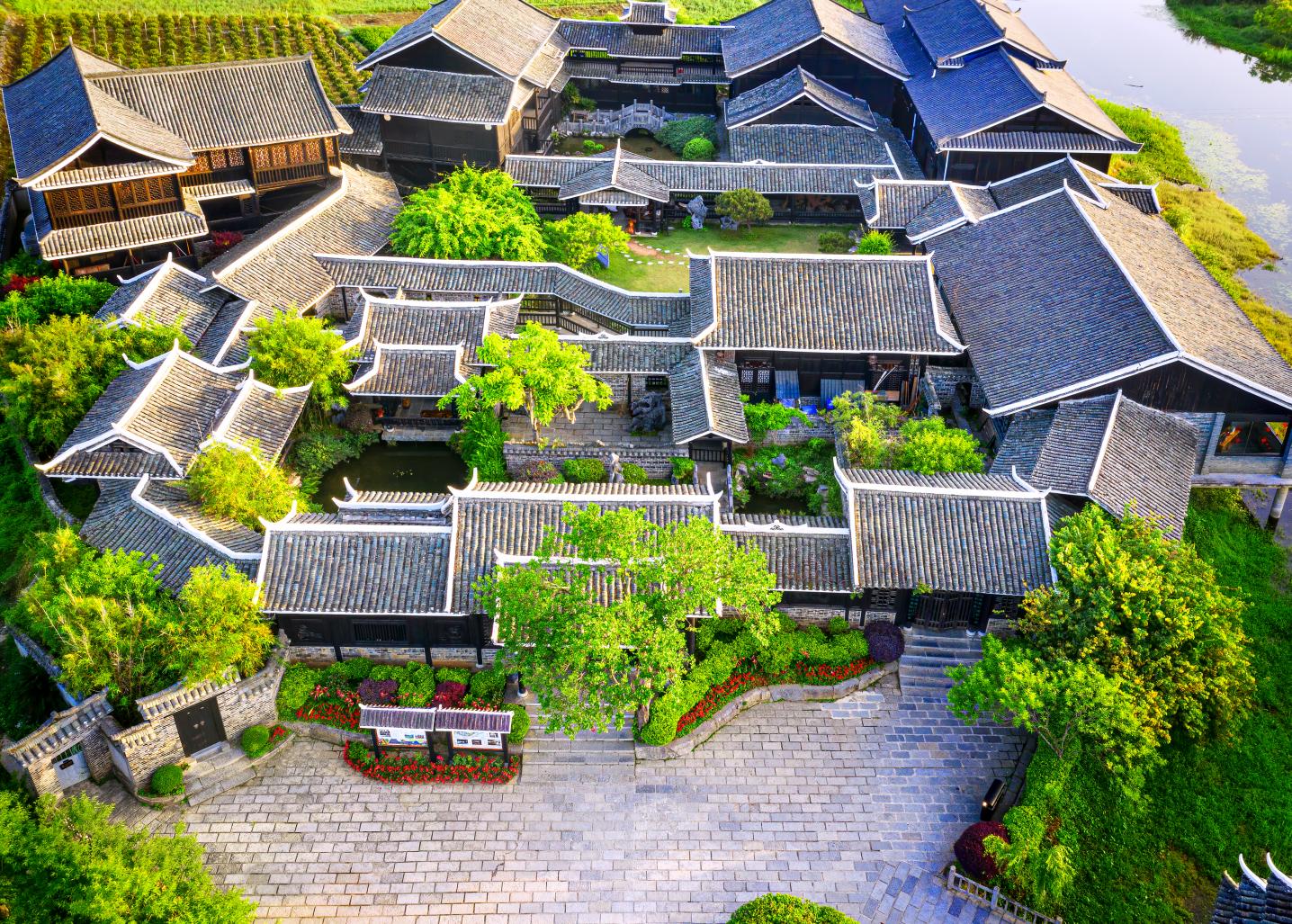
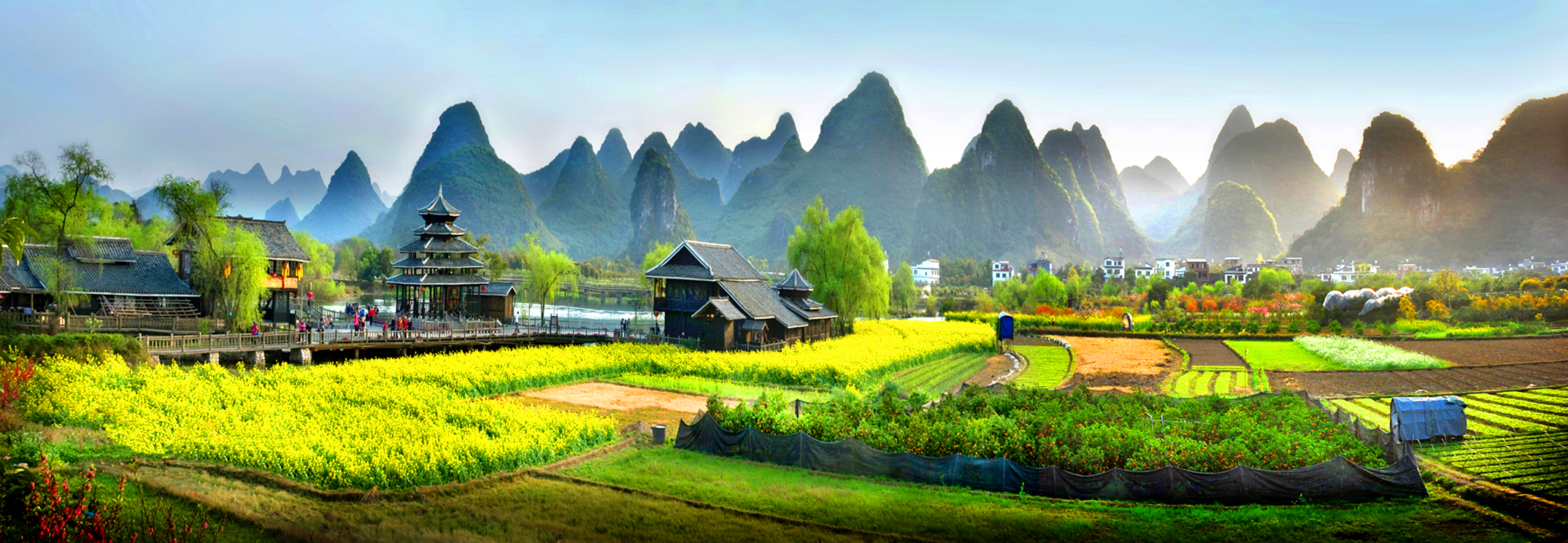
Through Li River misty rain, across the peach forest waterfront, between the distant mountains, bamboo shadows and streams, quietly sits a landscape garden full of oriental poetry-Yuanming Villa. Here, built in the name of Tao Yuanming. Not only because "Peach Blossom Spring" originates from Tao Yuanming's spiritual world, but also because what is presented here is a kind of artistic conception of life that Chinese people have been yearning for for thousands of years-away from the hustle and bustle, return to the mountains and rivers, and return to the heart.
Pavilions, small bridges, flowing water, bamboo forests, distant mountains, kitchen smoke and pastoral homes, together constitute a slowly unfolding Oriental landscape scroll. It seems that people are not only visiting a garden, but also stepping into the Taoyuan world of "delicious grass and colorful fallen trees" written by Tao Yuanming.
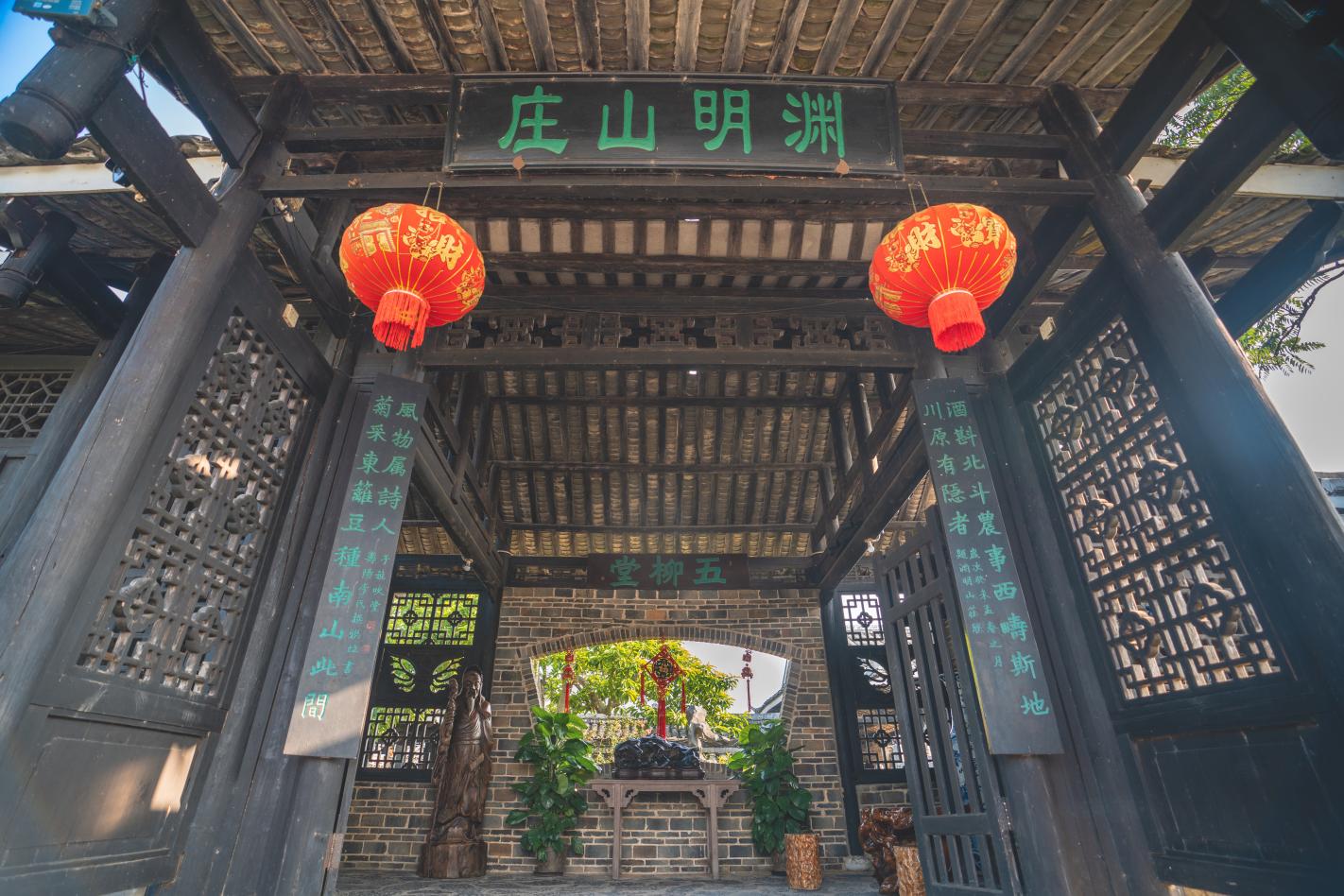
Photography Wang Ting "Wu Liu Tang"
五柳堂|归隐田园的精神原乡
Wuliutang is named after Tao Yuanming's biography of Mr. Wuliu: "there are five willows beside the house, because they think they are the number." The five willows are not only the scenery in front of the court, but also symbolize the spirit of seclusion in Chinese literati culture. Tao Yuanming was indifferent to fame and wealth all his life, unwilling to be bound by the secular world, so he chose to resign and return to his fields, accompanied by mountains and rivers, and walked with nature. In his pastoral world, there is no power dispute, no secular anxiety, only the most real and pure relationship between man and nature.
In the hall, classic poems such as "Return to Come", "Return to Garden", "Peach Blossom Spring", "Biography of Mr. Wu Liu" and other classic poems are displayed, allowing people to re-feel the transcendent realm of life. "Not in poverty, not in wealth." These words through the millennium, still have the power of peace. When the mountain wind blows over the willow shadow, when the distant mountains reflect the stream, people seem to be gradually away from the earthly disturbances and return to the true peace of mind.
Photography Wang Ting
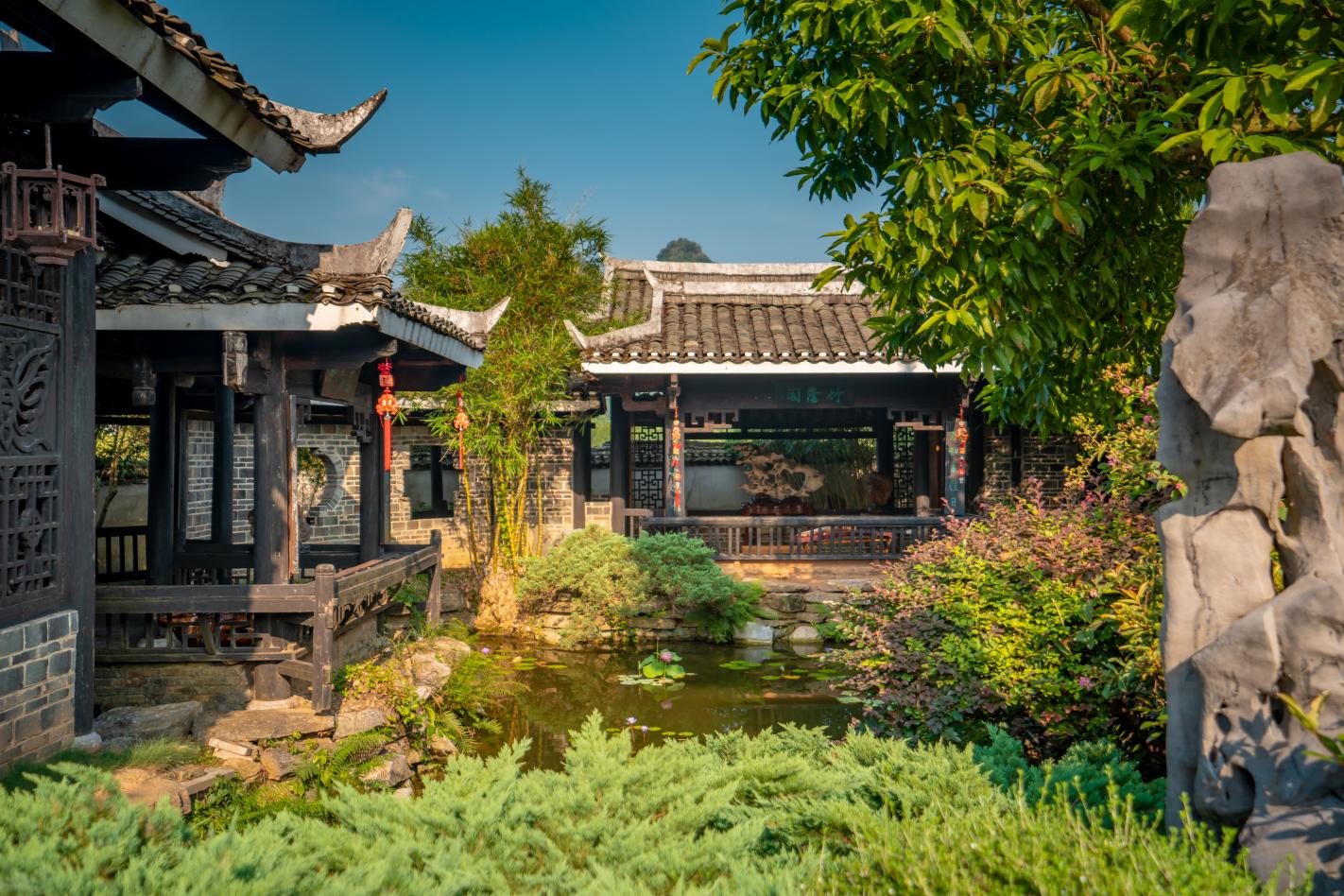
竹荫阁|竹影清风中的东方风骨
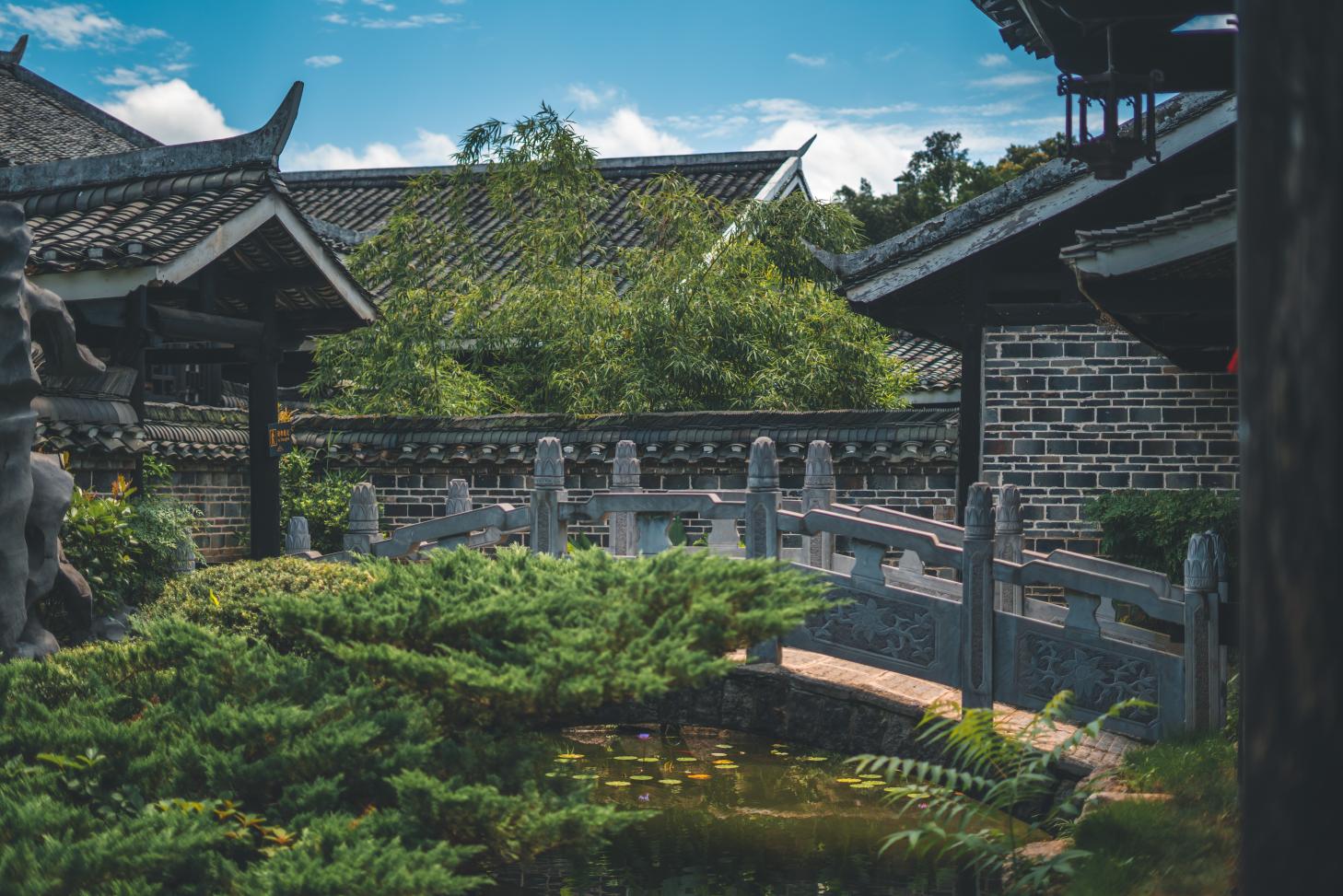
自古以来,竹,便是中国文人最钟爱的植物之一。它清雅、挺拔、虚心而有节,因此也成为东方文化中人格与气节的重要象征。陶渊明爱竹,后世文人亦爱竹。而渊明山庄中的竹荫阁,正是在这种东方文人意境中而生。竹影轻摇,清风徐来,光影缓缓落于石阶之间。
这里没有刻意雕琢的繁华,却拥有一种最安静、最自然的东方美感。古人曾言:“宁可食无肉,不可居无竹。”因为竹不仅是一种景观,更是一种精神。人在竹林之间,仿佛能够暂时忘却尘世喧嚣,只剩风声、水声与内心的平静。这种“心远地自偏”的境界,也正是桃花源最深层的精神意涵。
摄影 王婷《竹荫阁》
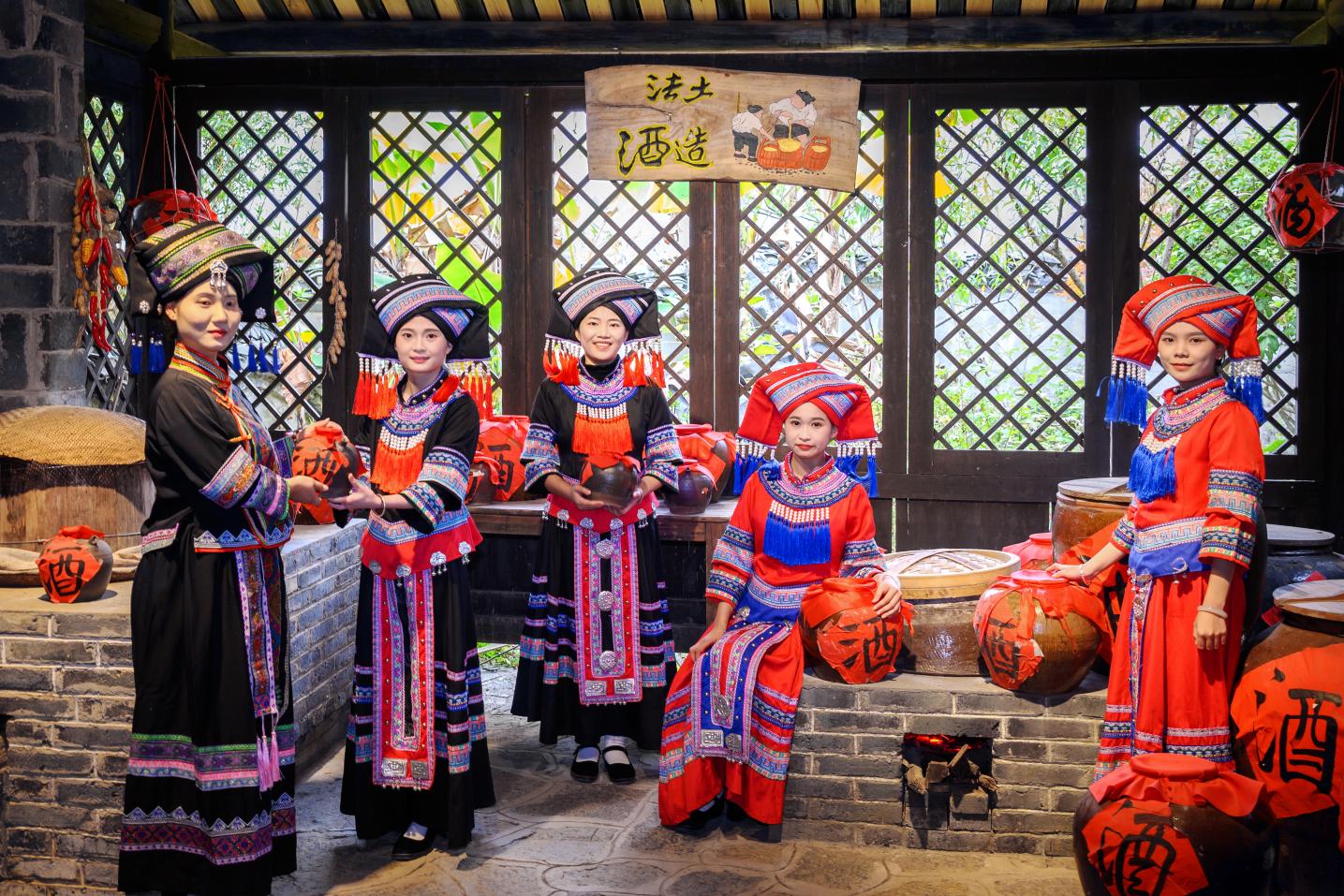
醉归桃源|山水之间的陶然人生
For Tao Yuanming, wine is not just a drink. More like an attitude towards life. In the chaotic times, Tao Yuanming chose to leave the officialdom and retire to the countryside, and wine became an important part of his poetic life. He likes drinking between mountains and rivers, drinking when chrysanthemums are in full bloom, and drinking between moonlight and pastoral. This kind of "drinking" is not indulging in pleasure, but a state of life that forgets the troubles of the world and returns to nature.
Tao Yuanming once wrote: "Picking chrysanthemum under the east fence, leisurely see Nanshan." Wine between, drunk is not a cup of wine, but the landscape, nature and life itself. Legend has it that Tao Yuanming had hoped that the field would be a variety of glutinous rice, just to brew his favorite wine. This love for wine, but also to show his natural, unworldly attitude towards life. Therefore, in Chinese traditional culture, Tao Yuanming's wine has never been a booze, but a kind of "homecoming wine", "pastoral wine" and "landscape wine".
Yuanming Villa also hopes to re-present the artistic conception of Tao Ran in this oriental literati culture. When the mountain wind blows over the bamboo forest, when the distant mountains reflect the fragrance of wine, people in Taoyuan, as if they can also temporarily let go of the troubles of the world. Perhaps, the real intoxicating, is never the wine itself, but the return to nature of life state of mind.
Photo Xiao Yanyun "National Fireworks in Taoyuan"
南山楼|诗意田园中的桃源时光
"Picking chrysanthemum under the eastern fence, leisurely see Nanshan." This is one of Tao Yuanming's most widely circulated verses and has become the most classic spiritual conception of Chinese pastoral aesthetics. Nanshan Building is therefore named. Climb the building and look far away, the mountains are stacked, the smoke village is looming, and small bridges and rivers are interwoven with pastoral scenery between heaven and earth. When the morning mist starts, the villa seems to be sleeping in the clouds. When the sun sets, the smoke curls up from kitchen chimneys adds a warm atmosphere to the whole Taoyuan.
What is presented here is not only the scenery, but also a way of life that the ancients yearned. Morning farming, with the moon and return; and the mountains and rivers as neighbors, symbiosis with the four seasons. In the Nanshan Tower, visitors can also experience the traditional Chinese techniques of papermaking and block printing. Between ink, wood and paper, the millennium context of Eastern civilization seems to have temperature again. Therefore, Nanshan Tower is not only a viewing space, but also an important window connecting Chinese poetic civilization and traditional culture.
风雨廊与观景楼|行走于真实的桃源画卷
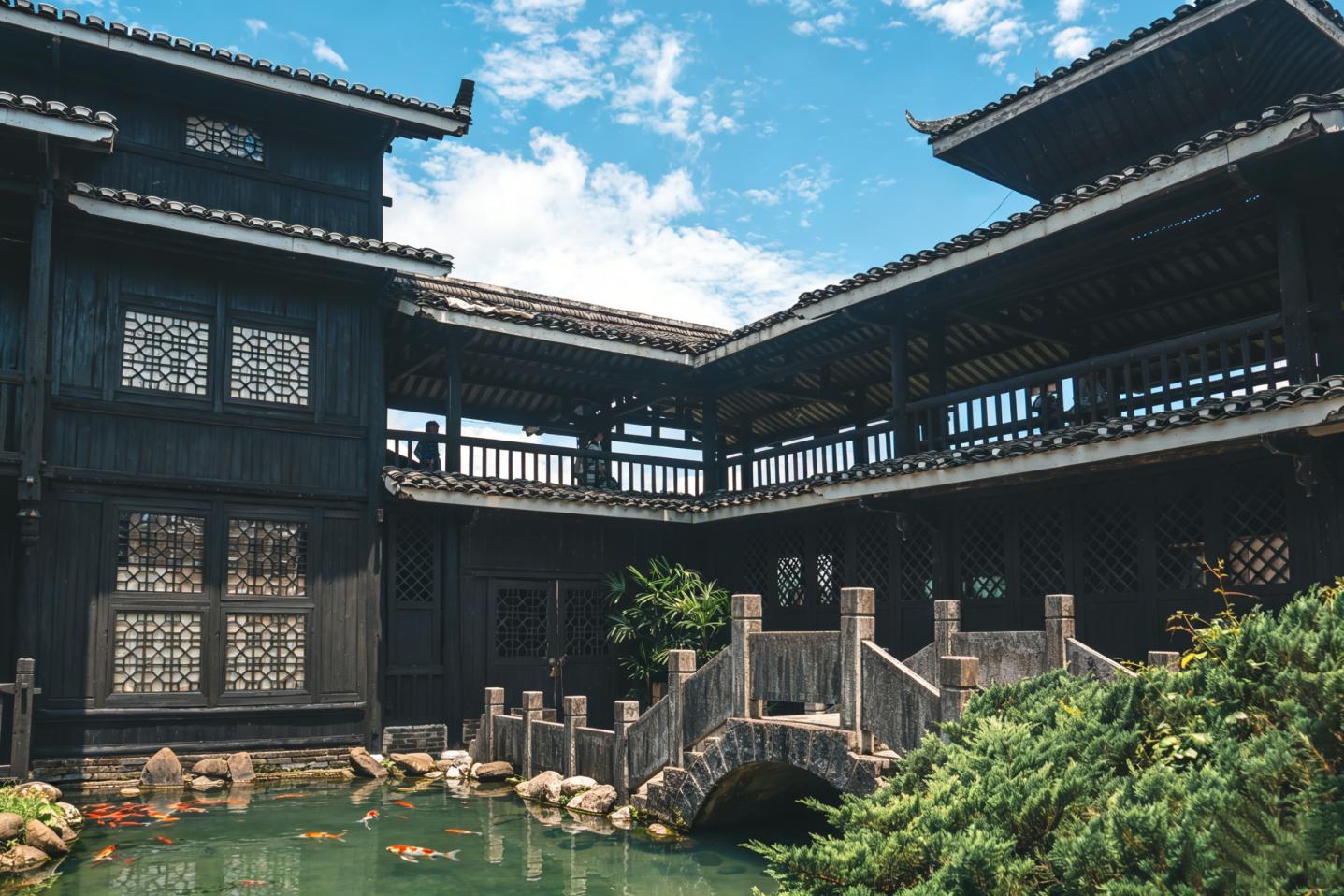
The most moving part of Yuanming Villa is that it does not deliberately pursue grandeur. It is more like a truly hidden in the landscape between the pastoral settlement. The view building adopts the pattern of oriental courtyard and folk houses in northern Guangxi. It can be seen by opening windows and painting step by step. Far mountains, streams, bamboo forests, fields, cottages and misty rain together constitute a progressive landscape mood. In the early morning, the village is still shrouded in mist; in the evening, smoke rises slowly and villagers walk home in the moonlight. This kind of quiet and real life atmosphere is just like the poetic world depicted in "Home in the Garden.
The wind and rain corridor connecting the scenery of the villa further strengthens the relationship between people and the landscape. On one side are pastoral farming and landscape scenery, on the other side are pavilions and flowing courtyards. People walk slowly in the gallery, as if crossing between reality and poetry.
The whole Yuanming Villa combines the folk houses in northern Guangxi, the oriental gardens and Taoyuan artistic conception, and unfolds naturally in accordance with the mountain situation. Waterfalls, fish ponds, small bridges, wooden houses and bamboo shadows together form a landscape atmosphere of "although made by people, it is like a natural. There is no earthly prosperity here, but it has the most real and gentle Taoyuan breath.
Photography Wang Ting "Wind and Rain Corridor"
The villa is Taoyuan, and the heart is far away.
For thousands of years, people have been looking for peach blossom. Some people yearn for mountains and rivers, some people yearn for the countryside, and some people yearn for a quiet life away from the hustle and bustle and return to their hearts. And Yuanming Villa is Chinese Wonderland's reinterpretation of this oriental ideal world.
There are the poetic pastoral described by Tao Yuanming, as well as the real and tangible fireworks in the world; there are the landscape feelings of Chinese literati, and there are also the spiritual dwelling of modern people. When the bamboo shadows shake gently, the mountain breeze blows, when the distant mountains reflect Taoyuan between the colors of the water-people will eventually understand that the real peach blossom garden may never be far away, but at the moment when the heart returns to nature.
Photograph by Zhao Heying "Yuanming Villa"